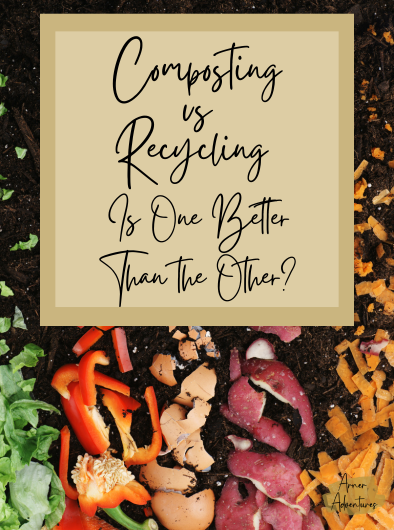
When it comes to composting vs recycling, should you concentrate on one more than the other? Is one better than the other? You may even ask yourself if there is one that has a bigger impact on helping the environment than the other. Well, first, we’re thrilled that you are interested. It means you are on the right path to helping take care of the Earth. We will walk you through all of this.
A few facts: Recycling one ton of paper can rescue about 17 trees. Composting produces carbon dioxide, which is 25 times less impactful on global warming than the methane that comes from landfills.
Our Sustainable Journey
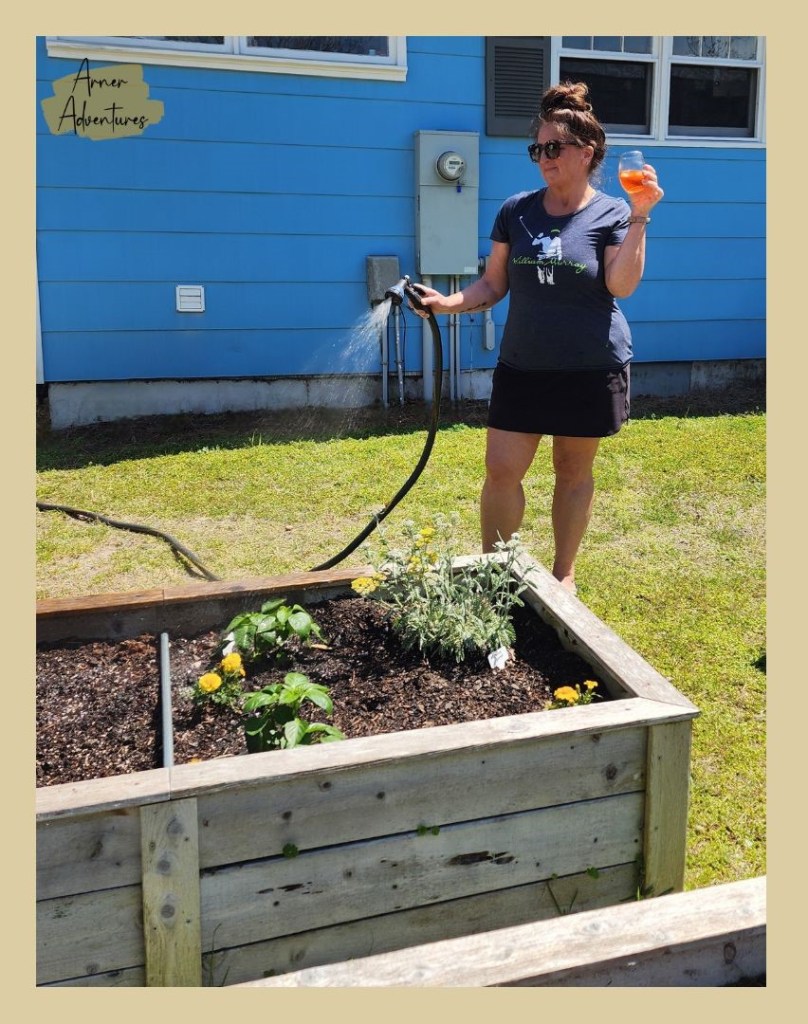
When we downsized a few years ago and opted to live simpler, we knew we wanted to live more sustainably. We began to learn as much as we could about our environmental impact, and our carbon footprint. Up until our big lifestyle change, we recycled because it was offered in our neighborhood, but other than that, we didn’t think about much else.
Then, composting entered our lives. It happened almost simultaneously with our desire to start a garden. When we read how much composting benefits your garden, we were hooked. Mainly, because it was something that we would control, and easily do, for free!
Composting vs Recycling: What is the Difference?
If you are unsure of the difference between composting and recycling, let’s go ahead and get to that first.
Composting
Composting? It’s a big deal for climate change. It’s all about using organic materials. Think food scraps, yard trimmings, even biodegradable packaging. Little microorganisms get to work, and break it all down. What’s the result? Healthy soil that can hold onto water better, and less need for those chemical fertilizers. It is amazing for your garden, flower pots, and anywhere you want to grow anything.
Now, here’s the kicker: when organic matter rots away in a landfill, it lets out methane. That is a real troublemaker for global warming. But composting on its own just gives off carbon dioxide, which is way less of a problem. Composting is most definitely a win for Mother Earth.
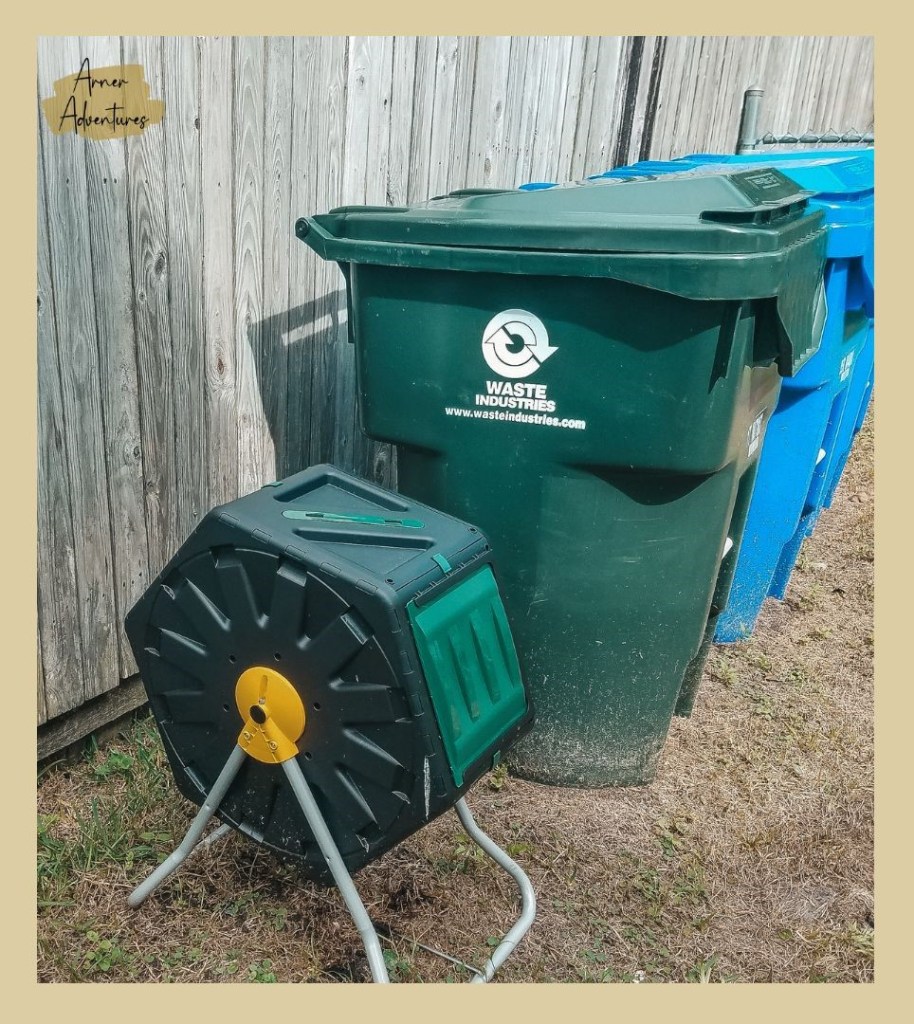
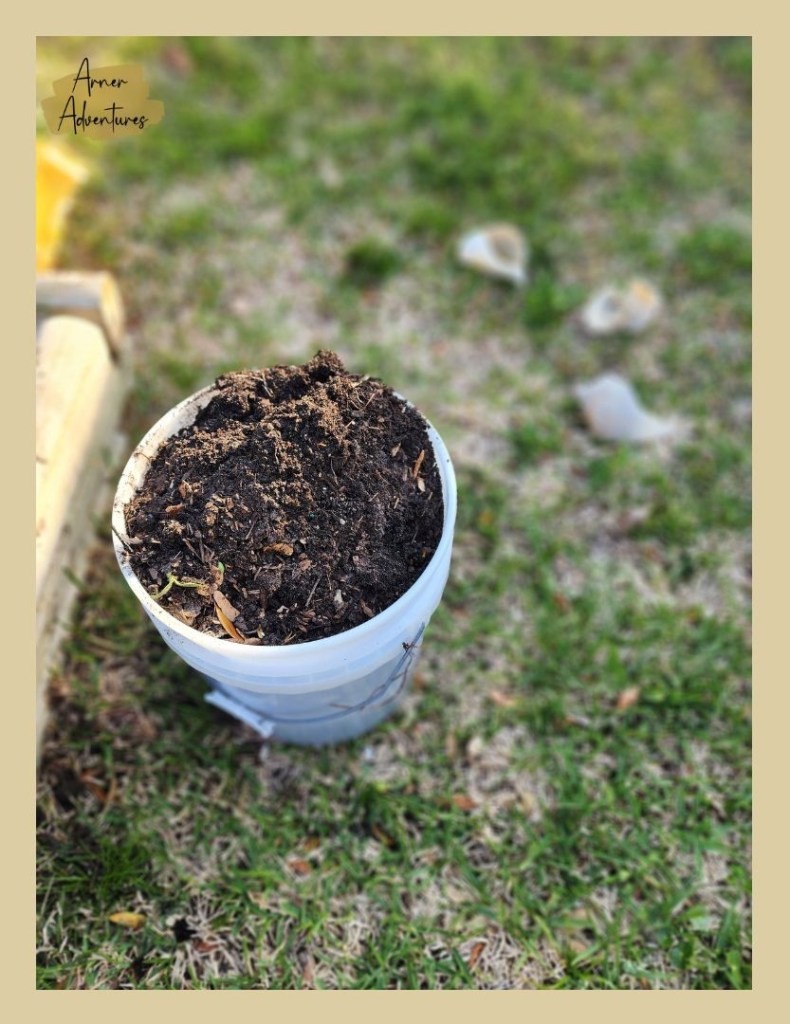
Aren’t sure how to compost? Read the Joy and Simplicity of Composting. It’s easy. You don’t need a compost bin. You can start a compost pile or a compost bucket.
Recycling
To recycle something means you are giving used stuff a new lease on life. Think paper, plastic, metal, and glass—all getting a second chance. Why bother? Well, recycling is like feeding two birds with one scone. First off, it saves us from drowning in landfills. Secondly, it cuts down on the nasty carbon dioxide released when we dig up and process fresh materials.
Recyclable materials like plastic have the biggest turnaround to make new products. Plastic bottles can become new bottles, bags, and even furniture. And when we recycle paper and cardboard boxes, we’re not just saving trees, we’re also saving energy.
Recycling is made easy for most people. You can throw recyclable items into a recycling bin and roll it to your street for pick-up. You may be someone who has to take it to a larger bin in your neighborhood, but that is pretty simple, too.
Is Composting Better Than Recycling?
When it comes to composting vs. recycling, both are eco-friendly heroes in their own right. Is one better than the other? It all depends on what your goal is.
Composting turns food scraps and yard waste into nutrient-rich goodness. It helps our gardens grow and cuts down on methane greenhouse gas emissions from landfills. Plus, it’s a natural process that doesn’t require a ton of energy. It also helps you do something positive with food waste.

Recycling gives old stuff new life. It conserves resources, slashes landfill waste, and reduces the need for new items. Plus, it’s a key player in the fight against climate change, cutting down on carbon emissions that come from extracting raw materials, mining, and manufacturing.
It’s difficult to say if one is better than the other. They’re both essential players in our journey toward a more sustainable life. They should both be in your toolbox for turning the amount of waste we accumulate into something helpful and good for the planet. Think of composting as the BFF of the garden, while recycling is the champion of the circular economy. They are great on their own, but together… well, they make a pretty great team!
Composting vs Recycling Myths
There are a ton of myths about composting and recycling. We’ll help address some of them that we hear about a lot.
- Take biodegradable plastic, for instance. Some people think that it is the next best thing since sliced bread. Just because it says biodegradable, doesn’t mean it’s fabulous. Most biodegradable plastic needs special conditions to break down. Stick it in a landfill, and it could sit there for centuries, not budging an inch.
- Another myth is that all plastics can be recycled. That’s not the case. Some plastics, like bags and certain food wrappings, often get the cold shoulder from recycling centers. Why? Well, they’re either too contaminated or too tricky to process. Some plastic containers like pill bottles are too small and will get stuck in the recycling machines.
- There’s the belief that all paper products can be composted. While most paper items are compostable, things like glossy paper and receipts often contain chemicals that aren’t friendly to the compost pile. If you wouldn’t want the item on the paper, like some inks and toxic residue in your food (think, your vegetable garden) then don’t throw it in the compost bin.
- Composting and recycling are just too complicated. No way. We won’t even hear of it. Sure, they might seem a bit daunting at first, trying to figure out what is organic waste, what is compostable packaging, and if these paper towels can be thrown into the recycling. With a little bit of practice, anyone can become a recycling and composting pro. So don’t let the myths scare you off—give it a try, and you’ll be doing your part to save the planet in no time! We have found that it is even fun (hi, yes, we’re nerds!) to figure out if something is of compostable materials.
Does it Make a Difference if I Compost and Recycle?
Listen, every decision you make in purchases and consumption makes a difference, good or bad. If you want to make a good, positive difference, start at the grocery store.
Refuse waste materials that cannot be recycled. Try not to even bother with packaging at all. Sure, we want to utilize the recycling process, but it is an expensive process. If you don’t buy plastic water bottles, we don’t even need to have them made. If we bring our own bags into the store, there is no need for plastic bags.
The best way to make a difference is to do something. Try one of these or both. Plastic pollution is killing marine life. We see it here living on the coast. The amount of plastic in the ocean rises daily.
The exploitation of natural resources can also lead to environmental degradation, habitat loss, pollution, and other negative impacts if not managed sustainably.
Renewable natural resources are those that can be naturally replenished or regenerated relatively quickly, such as sunlight, wind, water, forests, and crops.
Non-renewable natural resources cannot be replenished. Some of these are fossil fuels, minerals, and groundwater.
So, yes, there are plenty of environmental benefits and health benefits of you deciding to compost and recycle. There is no war when it comes to composting vs recycling. Both are extremely beneficial, and both make a big difference.
FAQs | Frequently Asked Questions
Compostable products are made from organic materials such as plant-based plastics, paper, or other natural fibers. Avoid products made from traditional plastics, as they do not break down in composting systems. If it didn’t come from the ground, don’t put it in the compost pile.
We will start by saying, try no packaging. You don’t have to have a package to buy something. There are alternatives to that like repurposed or recycled packaging that you can also repurpose or recycle.
If you live in a small area and are looking to compost on a micro-level, your coffee grounds would be the first thing to consider. No yard scraps? That’s ok. Apple cores, peels from veggies, and other food items that came from the ground are compostable items.